Photography pays across a wide range of subjects, from landscapes and animals to everyday objects. Even hobbyist photographers can earn money supplying stock images to businesses and individuals who need visual content.
Earn Money as a Hobbyist Photographer
Hobbyist photography income suits those who aren't chasing a professional career but want to earn from images they're already taking. The methods below work best for photographers who take quality shots casually and want a low-maintenance way to monetize them online.
The output directly determines the income. More uploads across more platforms means more licensing opportunities, so effort still matters even at the hobby level.
Sell Stock Images on Online Marketplaces
Stock image platforms let buyers purchase a license to use your photos, paying you royalties of 15% to 45% per sale. Prices vary by rarity, subject demand, and image quality, ranging from a few dollars to several hundred per license.
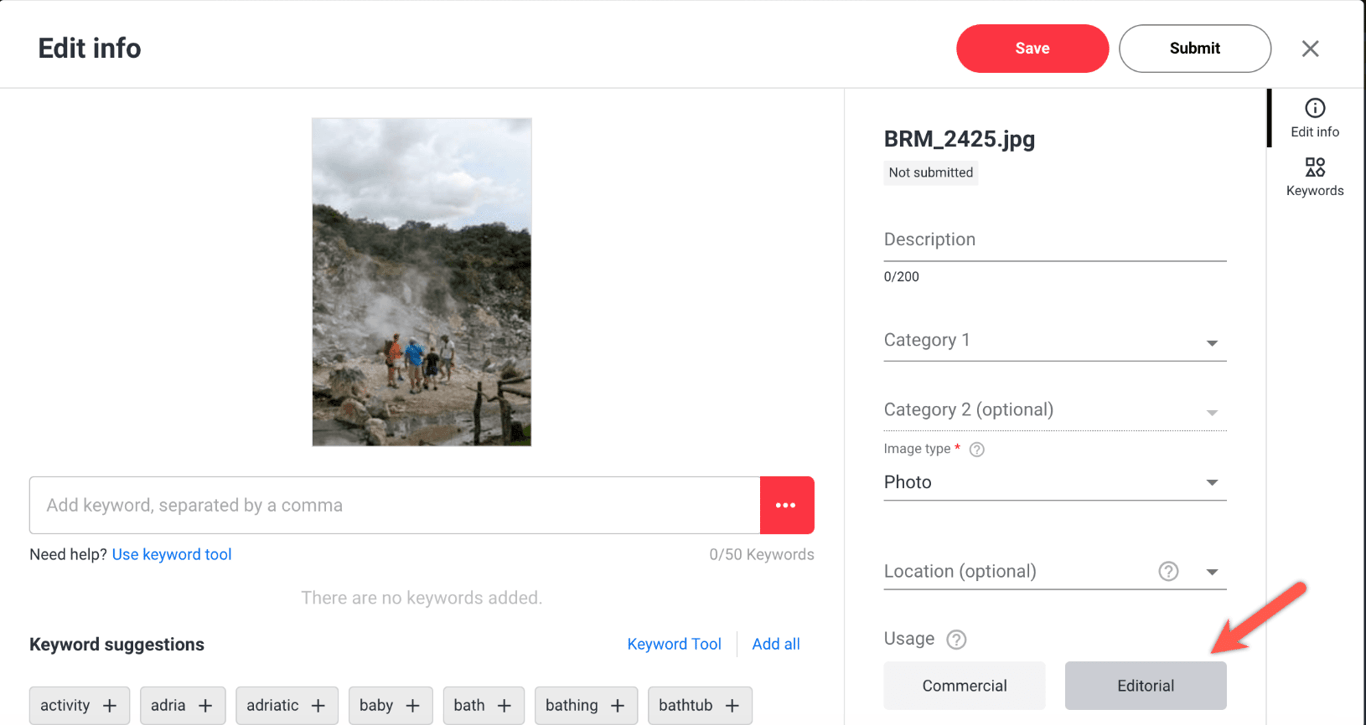 Stock image upload interface on a photography platform · February, 2025
Most platforms require you to purchase a standard contributor license before you can start selling. Uploading across several sites at once increases visibility and income. Three platforms worth starting with:
- ClickASnap: Pays $0.90 per view rather than per license sale, with a minimum payout of $15.
- Getty Images / iStock: Submit four to five images for review to get accepted as a contributor and reach a large buyer base.
- Adobe Stock: Accepts photos, videos, illustrations, and vectors, making it a strong option if you produce more than stills.
If you shoot while traveling, you can combine photography income with location-based earning strategies to maximise returns on the road.
Keep in Mind: Most, if not all images will need to be approved by the platform before being set up for sales or views.
Photography pays across a wide range of subjects, from landscapes and animals to everyday objects. Even hobbyist photographers can earn money supplying stock images to businesses and individuals who need visual content.
Earn Money as a Hobbyist Photographer
Hobbyist photography income suits those who aren't chasing a professional career but want to earn from images they're already taking. The methods below work best for photographers who take quality shots casually and want a low-maintenance way to monetize them online.
The output directly determines the income. More uploads across more platforms means more licensing opportunities, so effort still matters even at the hobby level.
Sell Stock Images on Online Marketplaces
Stock image platforms let buyers purchase a license to use your photos, paying you royalties of 15% to 45% per sale. Prices vary by rarity, subject demand, and image quality, ranging from a few dollars to several hundred per license.
Stock image upload interface on a photography platform · February, 2025
Most platforms require you to purchase a standard contributor license before you can start selling. Uploading across several sites at once increases visibility and income. Three platforms worth starting with:
- ClickASnap: Pays $0.90 per view rather than per license sale, with a minimum payout of $15.
- Getty Images / iStock: Submit four to five images for review to get accepted as a contributor and reach a large buyer base.
- Adobe Stock: Accepts photos, videos, illustrations, and vectors, making it a strong option if you produce more than stills.
If you shoot while traveling, you can combine photography income with location-based earning strategies to maximise returns on the road.
Enter Photo Contests for Cash and Gear
Photo contests offer cash prizes ranging from a few hundred to several thousand dollars, with well-known competitions also awarding free equipment and trophies. Most are free to enter, entirely online, and open to editing the image however you like before submission.
Avoid contests that charge an entry fee unless the prize and exposure are worth the cost. Free contests deliver the same networking and recognition value without the financial risk.
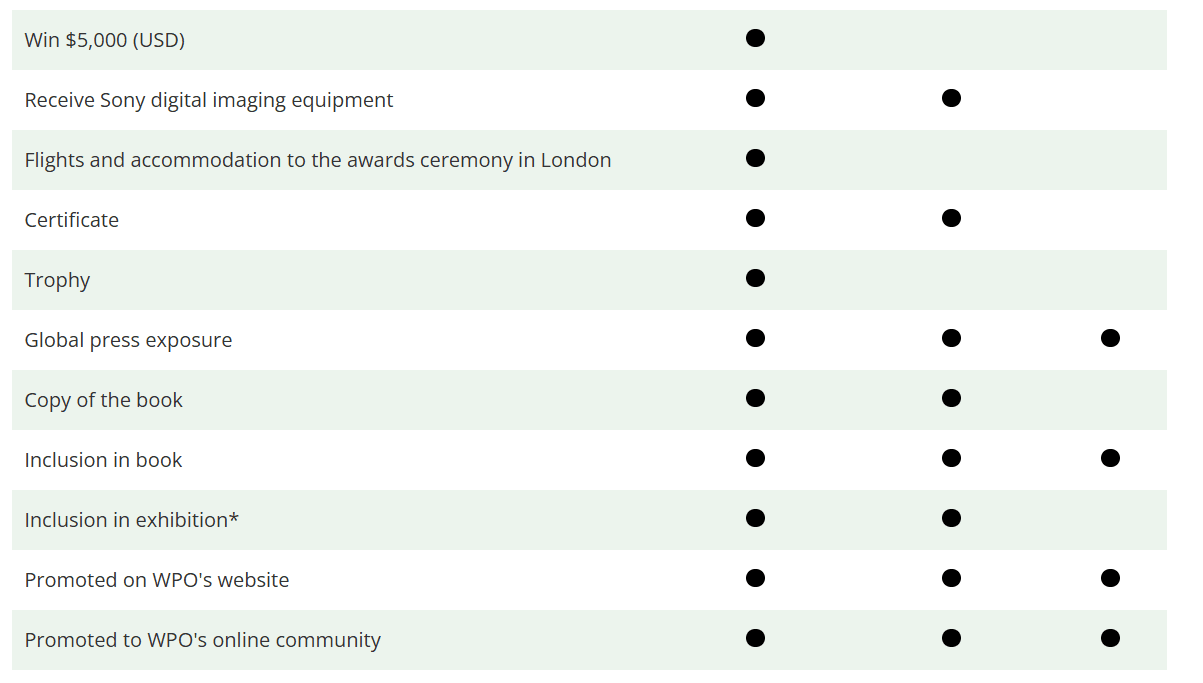 Prize breakdown for a Sony World Photography Awards contest · February, 2025
Once entered, winners are typically announced within one to two months. Two reliable places to start are Fine Arts Shows for local and regional competitions, and the Sony World Photography Awards for international recognition. Searching "local photo contests" online will also surface location-specific opportunities.
Photography pays across a wide range of subjects, from landscapes and animals to everyday objects. Even hobbyist photographers can earn money supplying stock images to businesses and individuals who need visual content.
Earn Money as a Hobbyist Photographer
Hobbyist photography income suits those who aren't chasing a professional career but want to earn from images they're already taking. The methods below work best for photographers who take quality shots casually and want a low-maintenance way to monetize them online.
The output directly determines the income. More uploads across more platforms means more licensing opportunities, so effort still matters even at the hobby level.
Sell Stock Images on Online Marketplaces
Stock image platforms let buyers purchase a license to use your photos, paying you royalties of 15% to 45% per sale. Prices vary by rarity, subject demand, and image quality, ranging from a few dollars to several hundred per license.
Stock image upload interface on a photography platform · February, 2025
Most platforms require you to purchase a standard contributor license before you can start selling. Uploading across several sites at once increases visibility and income. Three platforms worth starting with:
- ClickASnap: Pays $0.90 per view rather than per license sale, with a minimum payout of $15.
- Getty Images / iStock: Submit four to five images for review to get accepted as a contributor and reach a large buyer base.
- Adobe Stock: Accepts photos, videos, illustrations, and vectors, making it a strong option if you produce more than stills.
If you shoot while traveling, you can combine photography income with location-based earning strategies to maximise returns on the road.
Enter Photo Contests for Cash and Gear
Photo contests offer cash prizes ranging from a few hundred to several thousand dollars, with well-known competitions also awarding free equipment and trophies. Most are free to enter, entirely online, and open to editing the image however you like before submission.
Avoid contests that charge an entry fee unless the prize and exposure are worth the cost. Free contests deliver the same networking and recognition value without the financial risk.
Prize breakdown for a Sony World Photography Awards contest · February, 2025
Once entered, winners are typically announced within one to two months. Two reliable places to start are Fine Arts Shows for local and regional competitions, and the Sony World Photography Awards for international recognition. Searching "local photo contests" online will also surface location-specific opportunities.
Find Photography Work on Freelance Job Boards
Freelance platforms connect photographers with paid gigs without requiring an established portfolio. A strong profile helps attract better clients, but you can start with just a few solid samples.
Three platforms worth using are Freelancer, which takes 20% on your first $500 earned then reduces its cut as earnings grow; Upwork, which charges 25% for roughly the first six months before dropping to 15%; and Fiverr, where you set your own price and display your work for clients to browse and hire you directly.
Most photographers earn their first $500 to $1,000 within five to six months of consistent effort. Spending one to two hours a day on the platform tends to produce the best early results.
Build a Career as a Professional Photographer
Professional photography is the highest-earning path in this field, with demand across events, production studios, blogs, and video content. Within a year of focused effort, a first high-paying gig in the $500 to $1,000 range is realistic, and regular clients can push monthly income to $2,000 to $4,000.
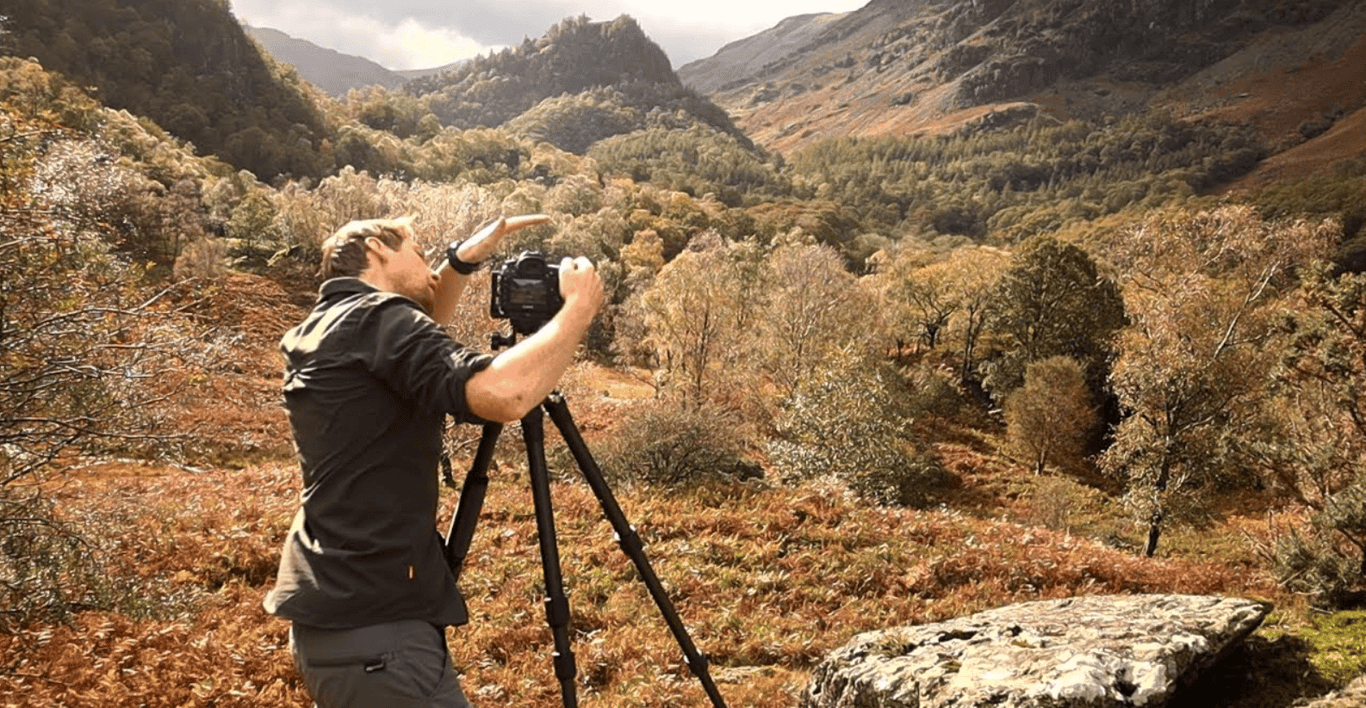 YouTube photographer Thomas Heaton filming outdoors · February, 2025
Building a portfolio and a clear personal brand are the two most important early steps. Picking a niche and sticking to it builds credibility faster than shooting across multiple genres. Attending industry events and connecting with other photographers also accelerates client acquisition.
Display Your Work at Art Shows and Craft Fairs
Art shows give photographers a physical space to present their work and meet potential clients face to face. Most shows are paid entry and require preparation time of a month or two, but a well-set-up booth brings clients to you rather than requiring outbound pitching.
Getting started involves four steps. First, locate a local show using the Fine Arts Shows directory. Second, apply and submit relevant work samples for approval. Third, prepare a mood board or display that communicates your style and range. Fourth, arrive early to secure a better spot and make time to meet and speak with other photographers about potential collaborations.
Book Wedding and Event Photography Gigs
Weddings and events are among the most consistent and well-paying gigs available to photographers who have built some experience. They represent a strong entry point into professional work and a reliable source of referrals once the first bookings are complete.
Keep in Mind: Events and Weddings are a one time shot, these are typically very important as you do not have an opportunity to try again. Understanding angles, good lenses, and portrait practice are all three great know-hows to have before accepting your first gig.
Photography pays across a wide range of subjects, from landscapes and animals to everyday objects. Even hobbyist photographers can earn money supplying stock images to businesses and individuals who need visual content.
Earn Money as a Hobbyist Photographer
Hobbyist photography income suits those who aren't chasing a professional career but want to earn from images they're already taking. The methods below work best for photographers who take quality shots casually and want a low-maintenance way to monetize them online.
The output directly determines the income. More uploads across more platforms means more licensing opportunities, so effort still matters even at the hobby level.
Sell Stock Images on Online Marketplaces
Stock image platforms let buyers purchase a license to use your photos, paying you royalties of 15% to 45% per sale. Prices vary by rarity, subject demand, and image quality, ranging from a few dollars to several hundred per license.
Stock image upload interface on a photography platform · February, 2025
Most platforms require you to purchase a standard contributor license before you can start selling. Uploading across several sites at once increases visibility and income. Three platforms worth starting with:
- ClickASnap: Pays $0.90 per view rather than per license sale, with a minimum payout of $15.
- Getty Images / iStock: Submit four to five images for review to get accepted as a contributor and reach a large buyer base.
- Adobe Stock: Accepts photos, videos, illustrations, and vectors, making it a strong option if you produce more than stills.
If you shoot while traveling, you can combine photography income with location-based earning strategies to maximise returns on the road.
Enter Photo Contests for Cash and Gear
Photo contests offer cash prizes ranging from a few hundred to several thousand dollars, with well-known competitions also awarding free equipment and trophies. Most are free to enter, entirely online, and open to editing the image however you like before submission.
Avoid contests that charge an entry fee unless the prize and exposure are worth the cost. Free contests deliver the same networking and recognition value without the financial risk.
Prize breakdown for a Sony World Photography Awards contest · February, 2025
Once entered, winners are typically announced within one to two months. Two reliable places to start are Fine Arts Shows for local and regional competitions, and the Sony World Photography Awards for international recognition. Searching "local photo contests" online will also surface location-specific opportunities.
Find Photography Work on Freelance Job Boards
Freelance platforms connect photographers with paid gigs without requiring an established portfolio. A strong profile helps attract better clients, but you can start with just a few solid samples.
Three platforms worth using are Freelancer, which takes 20% on your first $500 earned then reduces its cut as earnings grow; Upwork, which charges 25% for roughly the first six months before dropping to 15%; and Fiverr, where you set your own price and display your work for clients to browse and hire you directly.
Most photographers earn their first $500 to $1,000 within five to six months of consistent effort. Spending one to two hours a day on the platform tends to produce the best early results.
Build a Career as a Professional Photographer
Professional photography is the highest-earning path in this field, with demand across events, production studios, blogs, and video content. Within a year of focused effort, a first high-paying gig in the $500 to $1,000 range is realistic, and regular clients can push monthly income to $2,000 to $4,000.
YouTube photographer Thomas Heaton filming outdoors · February, 2025
Building a portfolio and a clear personal brand are the two most important early steps. Picking a niche and sticking to it builds credibility faster than shooting across multiple genres. Attending industry events and connecting with other photographers also accelerates client acquisition.
Display Your Work at Art Shows and Craft Fairs
Art shows give photographers a physical space to present their work and meet potential clients face to face. Most shows are paid entry and require preparation time of a month or two, but a well-set-up booth brings clients to you rather than requiring outbound pitching.
Getting started involves four steps. First, locate a local show using the Fine Arts Shows directory. Second, apply and submit relevant work samples for approval. Third, prepare a mood board or display that communicates your style and range. Fourth, arrive early to secure a better spot and make time to meet and speak with other photographers about potential collaborations.
Book Wedding and Event Photography Gigs
Weddings and events are among the most consistent and well-paying gigs available to photographers who have built some experience. They represent a strong entry point into professional work and a reliable source of referrals once the first bookings are complete.
- Create a shot list: Knowing which angles to prioritize keeps you focused when things move fast.
- Scout the location first: Walking the venue in advance lets you identify the best spots and plan for lighting conditions.
- Communicate with organizers beforehand: Understanding expectations before the day prevents surprises and improves the final delivery.
- Know your gear: Limit yourself to a few trusted pieces of equipment so nothing slows you down during the shoot.
- Take bold shots: If an angle looks promising, go for it.
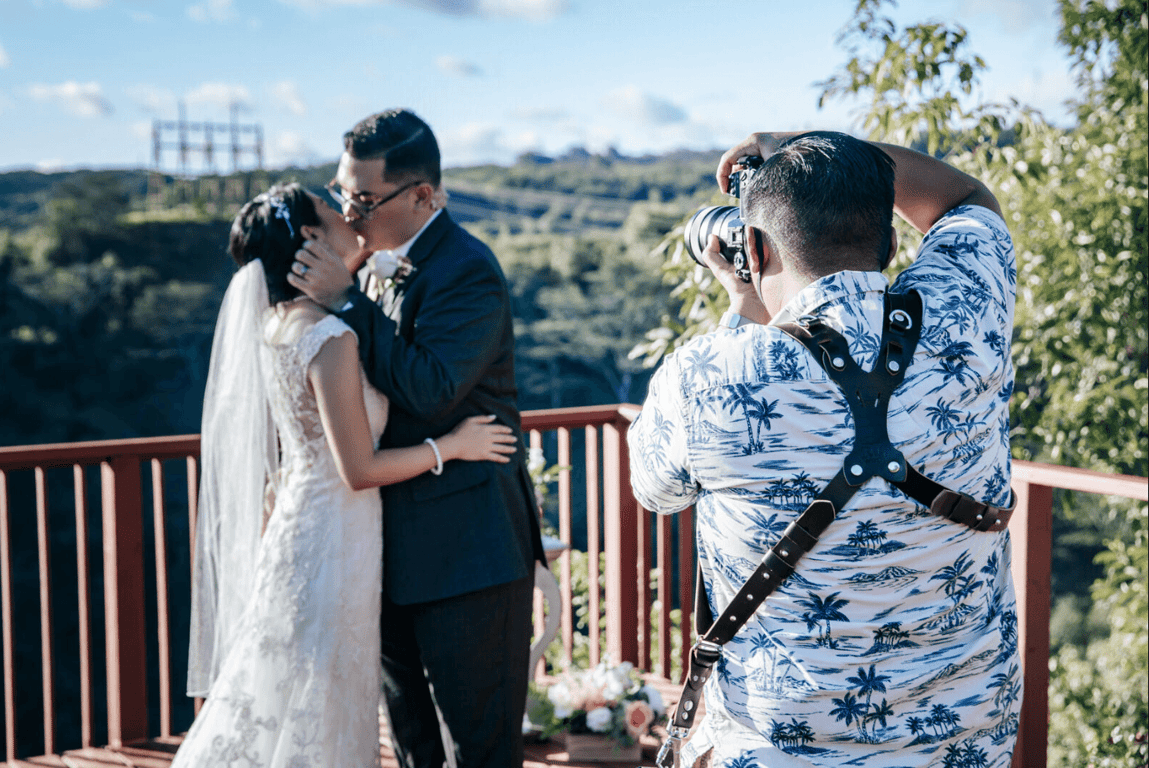 Photographer shooting outdoors at a wedding or event · February, 2025
Once established in event photography, per-session earnings of $1,000 or more are common. Conference and multi-day event gigs can pay $7,000 or above from a single booking.
Start Earning with Portrait Photography
Portrait photography is one of the most accessible niches to enter. Demand comes from job seekers, graduates, social media influencers, and families, and early practice clients are often as close as your own network.
Three variables shift with each portrait booking. Location changes based on whether the client wants a studio setting or an outdoor backdrop. Pricing varies by subject and use case, with professional headshots and newborn portraits typically commanding more than casual portraits. Gear selection should be kept simple and familiar, matching what you already know rather than testing new equipment on a paid shoot.


'%3e%3cpath%20fill='%23eee'%20d='m0%200%208%2022-8%2023v23l32%2054-32%2054v32l32%2048-32%2048v32l32%2054-32%2054v68l22-8%2023%208h23l54-32%2054%2032h32l48-32%2048%2032h32l54-32%2054%2032h68l-8-22%208-23v-23l-32-54%2032-54v-32l-32-48%2032-48v-32l-32-54%2032-54V0l-22%208-23-8h-23l-54%2032-54-32h-32l-48%2032-48-32h-32l-54%2032L68%200H0z'/%3e%3cpath%20fill='%230052b4'%20d='M336%200v108L444%200Zm176%2068L404%20176h108zM0%20176h108L0%2068ZM68%200l108%20108V0Zm108%20512V404L68%20512ZM0%20444l108-108H0Zm512-108H404l108%20108Zm-68%20176L336%20404v108z'/%3e%3cpath%20fill='%23d80027'%20d='M0%200v45l131%20131h45L0%200zm208%200v208H0v96h208v208h96V304h208v-96H304V0h-96zm259%200L336%20131v45L512%200h-45zM176%20336%200%20512h45l131-131v-45zm160%200%20176%20176v-45L381%20336h-45z'/%3e%3c/g%3e%3c/svg%3e)