High Earnings: Uber Eats offers more orders and more earnings
Less Competitive: Deliveroo offers a less competitive market
Better for Inner-City: Both Uber Eats and Deliveroo are great for inner-city deliveries with bikes and scooters.
Uber Eats and Deliveroo: Key Differences
Before choosing a delivery app, it's worth comparing onboarding process, support quality, order volume, flexibility, and pay. Deliveroo is a delivery app similar to Uber Eats, but the two platforms differ in ways that matter depending on how you plan to work.
Gig App
Onboarding
Support
Order Volume
Flexibility
Pay
Uber Eats
Easy (same-day setup)
Automated
High demand
No scheduling
$15–$25 per hour
Deliveroo
Hard (waitlist and legal steps)
More personal
Slow off-peak
Shift selection
$12–$20 per hour
Deliveroo works well as a supplementary gig alongside other delivery apps, but couriers who rely on it as their primary platform report that off-peak order volume makes it difficult to sustain consistent earnings on its own.
Uber Eats: Pros and Cons
Pros
Flexible scheduling
High earnings
Consistent bonuses
Consistent work
Cons
Saturated with high competition
Peak can be a hit or miss
Your location plays a large role in earnings
Uber Eats performs best during peak hours, but location, local competition, and transport method all affect whether the earnings hold up. Car-based couriers need to account for fuel costs, which can run to $80 or more on a full day — unless you find ways to reduce your fuel spend.
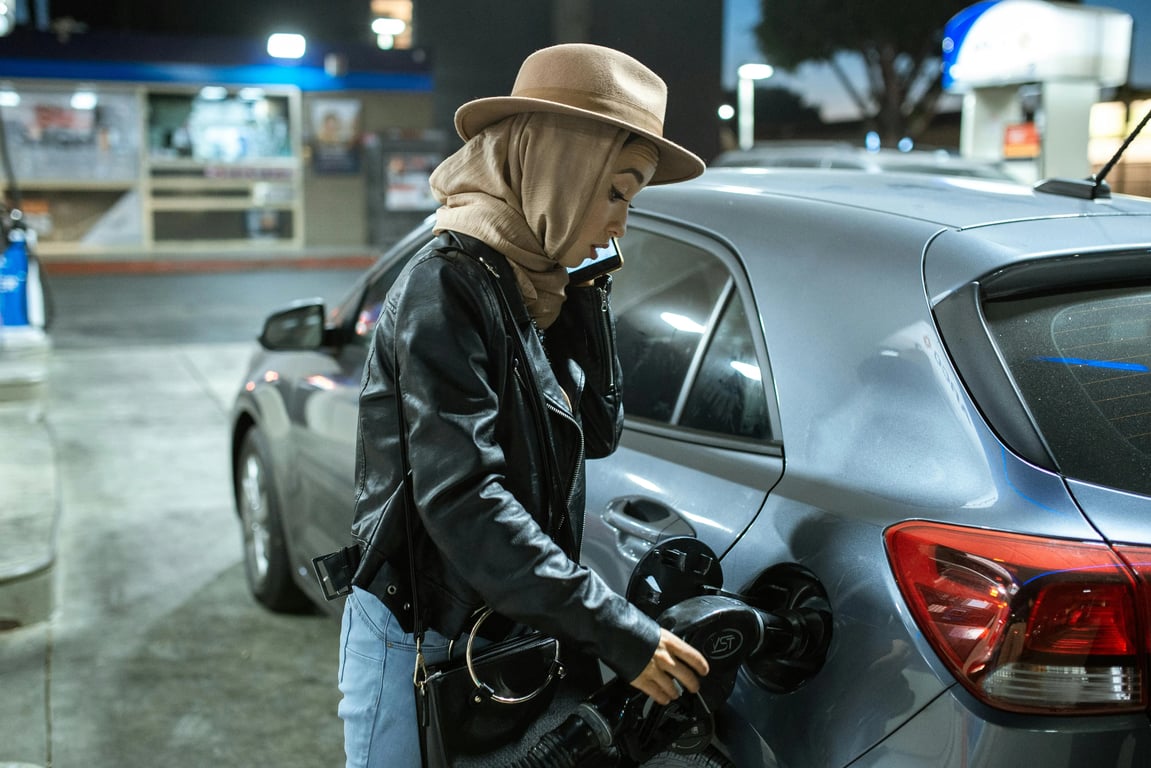
Woman pumping petrol at a fuel station while looking at her phone · June, 2025
In a busy city, an eight-hour shift can generate around $200 in gross earnings on a good day. After subtracting $80 in fuel costs, real take-home pay drops to roughly $70–$120. Consistent profitability generally requires a full eight-hour commitment rather than shorter sessions.
Deliveroo: Pros and Cons
Pros
Flexible and well structured
Higher per-order earnings
Easy-to-use app
More transparency on accepting orders
Cons
Long onboarding with strict process
very few orders off peak
inconsistent bonuses and incentives
Only limited to the UK
Deliveroo's pay-per-order rate can be competitive, but off-peak periods mean long waits between deliveries. Holiday windows are the exception — order volume spikes significantly and earnings reflect that.
Couriers with a bike or e-bike are better placed with Deliveroo than those using a car, since lower overall demand translates directly to lower fuel exposure. Without fuel costs in the equation, it's possible to build earnings quickly on a non-motorised vehicle.
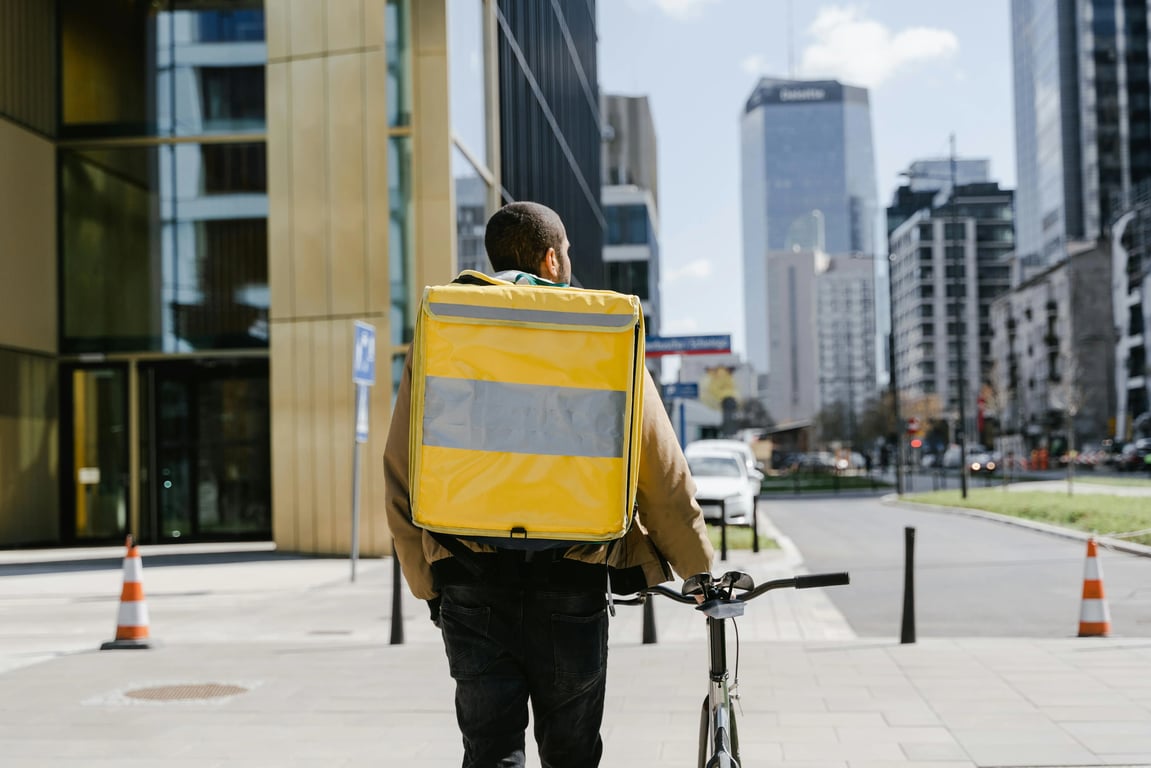
Delivery courier with a yellow bag standing next to a bicycle on a city street · June, 2025
The app is straightforward to use, with clear order information displayed upfront. Bonuses and incentives are less predictable — availability tends to be inconsistent, and timing doesn't always align with when couriers are active.
One strategy worth considering: monitor where orders are available across both platforms before accepting, and prioritise whichever has lower local competition at that moment.
Final Verdict: Uber Eats or Deliveroo?
For most couriers, Uber Eats is the stronger primary platform. Order volume is higher, earnings hold up across vehicle types, and it works well as a flexible income source for students or anyone fitting delivery around other commitments.
Deliveroo's regional availability makes it a natural second option for couriers in the UK. Lower demand means less competition per order, and for bike-based couriers the absence of fuel costs makes the lower pay-per-order rate more viable. As a supplementary delivery app alongside Uber Eats, it earns its place — particularly during peak holiday periods when volume spikes.
Got more questions?
Ask the Freecash community anything. You will find us on Facebook, Reddit, and Discord.
The internet's favorite 'too good to be true' app. Play games, try new apps, take surveys, earn cashback. Your first offer unlocks a $10 welcome bonus.


'%3e%3cpath%20fill='%23eee'%20d='m0%200%208%2022-8%2023v23l32%2054-32%2054v32l32%2048-32%2048v32l32%2054-32%2054v68l22-8%2023%208h23l54-32%2054%2032h32l48-32%2048%2032h32l54-32%2054%2032h68l-8-22%208-23v-23l-32-54%2032-54v-32l-32-48%2032-48v-32l-32-54%2032-54V0l-22%208-23-8h-23l-54%2032-54-32h-32l-48%2032-48-32h-32l-54%2032L68%200H0z'/%3e%3cpath%20fill='%230052b4'%20d='M336%200v108L444%200Zm176%2068L404%20176h108zM0%20176h108L0%2068ZM68%200l108%20108V0Zm108%20512V404L68%20512ZM0%20444l108-108H0Zm512-108H404l108%20108Zm-68%20176L336%20404v108z'/%3e%3cpath%20fill='%23d80027'%20d='M0%200v45l131%20131h45L0%200zm208%200v208H0v96h208v208h96V304h208v-96H304V0h-96zm259%200L336%20131v45L512%200h-45zM176%20336%200%20512h45l131-131v-45zm160%200%20176%20176v-45L381%20336h-45z'/%3e%3c/g%3e%3c/svg%3e)