Successful course creators can earn as much as $10,000 per month. The amount depends on your course length, expertise, and target audience.
Create and Sell an Online Course
Choose Your Topic
Pick a topic that matches your existing skills or knowledge. Focusing on an area you know well builds student trust and helps you deliver real value.
Certifications or degrees that support your expertise help attract students. You should also have a genuine interest in the subject, since researching and building a course takes sustained effort.
Research the Market
Confirm there's demand for your course topic before you build it. A few reliable ways to check:
- Google Keyword Planner and Google Trends: High search volume for your topic signals strong interest.
- Existing courses on your topic: Some competition is a good sign. Too little may mean demand is weak.
- Forums like Reddit and Quora: Run polls or ask questions to gauge public interest directly.
- Online course platforms: Browse reviews to learn what students appreciate and what's missing from current offerings.
Understand Your Audience
Define who you're building the course for before you write a single lesson. Consider their age, occupation, professional background, and interests based on your topic.
Then research their learning goals and preferences. Useful methods include sharing a Google Form on social media, reviewing forums and blogs, conducting short video interviews, or testing demand with a free mini-course first.
Establish Your Course Outcomes
Lay out clear objectives once you know what your audience wants. Students need to understand exactly what they'll be able to do after completing the course.
A dog grooming course, for example, should leave students confident enough to groom their first dog on their own.
Research Your Topic
Even with existing knowledge, thorough research is worth the time. Every claim in your course must be accurate, relevant, and current.
Focus on the pain points and subtopics your audience raised during research. Cover your topic using a mix of sources: articles, videos, academic papers, and podcasts.
Build Your Course Structure
Your course structure determines what each lesson and module covers. If you're building for beginners, start with foundational information and build up from there.
Set clear objectives for what students should know by the end of each lesson. A beginner baking course might follow this structure:
- Basics of Baking
- Mixing and Baking
- Cooling and Decorating
For advanced learners, you can break topics into greater detail:
- Ingredient Functions
- Mixing Methods
- Advanced Cake Decoration
Dozens of platforms let you create and sell online courses. Evaluate each one across four areas before committing:
Ease of Use
Platforms with drag-and-drop tools and simple navigation reduce friction, especially for first-time course creators. Thinkific and Teachable are both known for being straightforward to use.
Platform Reach
A larger built-in audience increases your chances of organic sales. Skillshare and Udemy have significant user bases, though competition on those platforms is higher.
Marketing Capabilities
Some platforms include built-in promotion tools. Kajabi, Podia, Skillshare, and Udemy all offer marketing features to help you reach more students.
Analytics
Tracking student behavior helps you identify what's working and where students drop off. Teachable and Skillshare both offer built-in reporting tools.
| Priority |
Recommended Platforms |
| Ease of use |
Thinkific, Teachable |
| Largest audience |
Skillshare, Udemy |
| Best for marketing |
Kajabi, Podia |
 Skillshare course platform interface · November, 2024
Create the Course Content
Build out your lessons using a variety of formats: videos, case studies, quizzes, and eBooks keep students engaged across different learning styles. Tools like Canva, Audacity, Google Docs, Vimeo, and Quizlet can make your course look and feel professional.
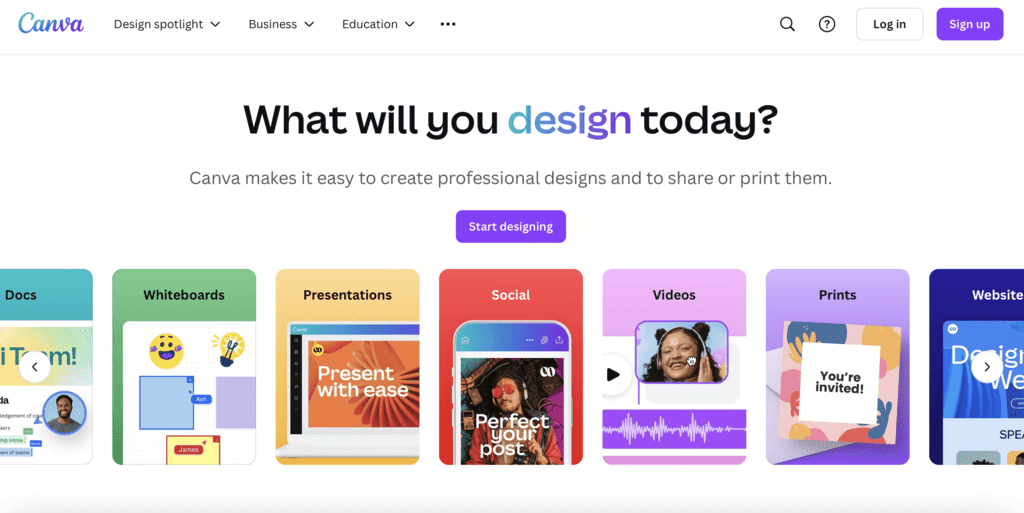 Canva design tool open for creating course materials · November, 2024
Edit and Review
Before publishing, cut filler language, check spelling and grammar, verify all facts are accurate, and confirm the flow holds from lesson to lesson. A clean, well-paced course holds students' attention and reduces drop-off.
Set Your Pricing
Course length and your credentials are the two biggest pricing factors. Check what similar courses charge to set a price that's competitive without underselling your expertise.
Most courses use either a one-time payment or a subscription model. One-time payments suit standalone courses; subscriptions work better when you have multiple offerings and want to give students ongoing access.
Factor in your production costs, including time spent recording, filming, and editing, to make sure the price covers your investment.
Promotion starts the moment you launch. Use email marketing, social media, paid ads, affiliate marketing, blogging, and SEO to build awareness.
Send a follow-up email after purchase to thank students and ask for a review. Reviews build credibility and help attract future buyers.
Gather Feedback and Improve
Send students a short survey at the end of the course to find out what worked and what didn't. If your platform has analytics, use them to track assignment completion and spot where students lose interest.
Low completion on a specific assignment is a signal to revise or replace it.
Creating and selling an online course lets you turn existing knowledge into income. Research your topic thoroughly, build high-quality content, and refine based on real student feedback. A well-built course can keep generating sales long after it launches.


'%3e%3cpath%20fill='%23eee'%20d='m0%200%208%2022-8%2023v23l32%2054-32%2054v32l32%2048-32%2048v32l32%2054-32%2054v68l22-8%2023%208h23l54-32%2054%2032h32l48-32%2048%2032h32l54-32%2054%2032h68l-8-22%208-23v-23l-32-54%2032-54v-32l-32-48%2032-48v-32l-32-54%2032-54V0l-22%208-23-8h-23l-54%2032-54-32h-32l-48%2032-48-32h-32l-54%2032L68%200H0z'/%3e%3cpath%20fill='%230052b4'%20d='M336%200v108L444%200Zm176%2068L404%20176h108zM0%20176h108L0%2068ZM68%200l108%20108V0Zm108%20512V404L68%20512ZM0%20444l108-108H0Zm512-108H404l108%20108Zm-68%20176L336%20404v108z'/%3e%3cpath%20fill='%23d80027'%20d='M0%200v45l131%20131h45L0%200zm208%200v208H0v96h208v208h96V304h208v-96H304V0h-96zm259%200L336%20131v45L512%200h-45zM176%20336%200%20512h45l131-131v-45zm160%200%20176%20176v-45L381%20336h-45z'/%3e%3c/g%3e%3c/svg%3e)