Uber Eats vs Grubhub: Key Differences
Both platforms operate similarly at a surface level, but differ in how earnings are structured and how predictable income is week to week. Here's how the main factors compare:
| Factor |
Uber Eats |
Grubhub |
| Earnings Potential |
Higher, with surge pricing and incentives |
More stable, with lower ceiling |
| Hourly Pay (Estimate) |
$15–$25 |
$15–$22 |
| Income Stability |
Varies, strongest during peak hours |
More predictable |
| Tips |
100% to driver |
100% to driver |
| Bonuses |
Surge pricing, quests |
Mission bonuses, peak pay |
Uber Eats offers higher earning potential, while Grubhub provides more consistent income at a lower ceiling. For a broader look at delivery apps worth considering, several alternatives follow a similar structure.
Earnings Using Uber Eats
Pay varies by city, but driver reports consistently place average earnings between $15 and $25 per hour, with peak delivery windows pushing toward the higher end. Actual earnings also reflect delivery distance, time on the road, and pickup and drop-off fees.
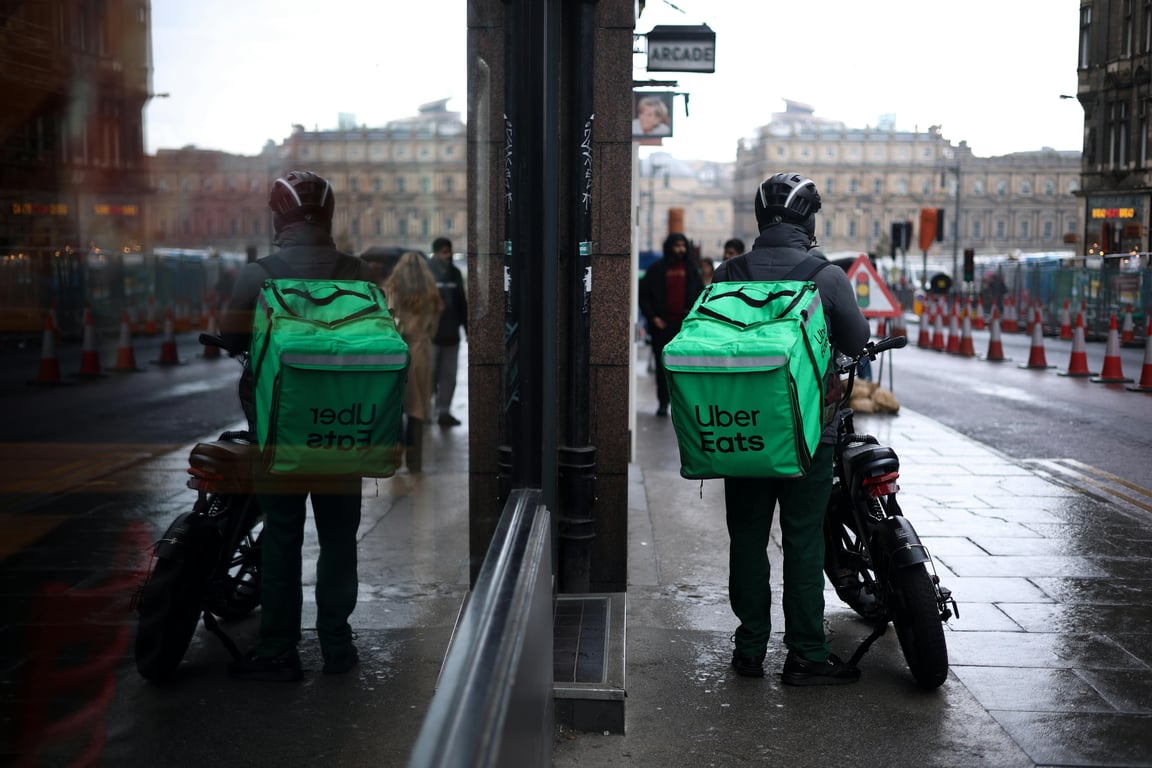 Uber Eats driver carrying a delivery bag · March, 2025
Peak hours produce the strongest returns, as Uber Eats applies surge pricing and offers quest bonuses that reward drivers who complete a set number of deliveries within a window.
Earnings Using Grubhub
Grubhub holds a significant share of US food delivery orders, and pay varies considerably by market. New York drivers report earnings closer to $22 per hour with consistent order volume throughout the day. Smaller markets like Oklahoma City see concentrated demand around breakfast, lunch, and a brief dinner window.
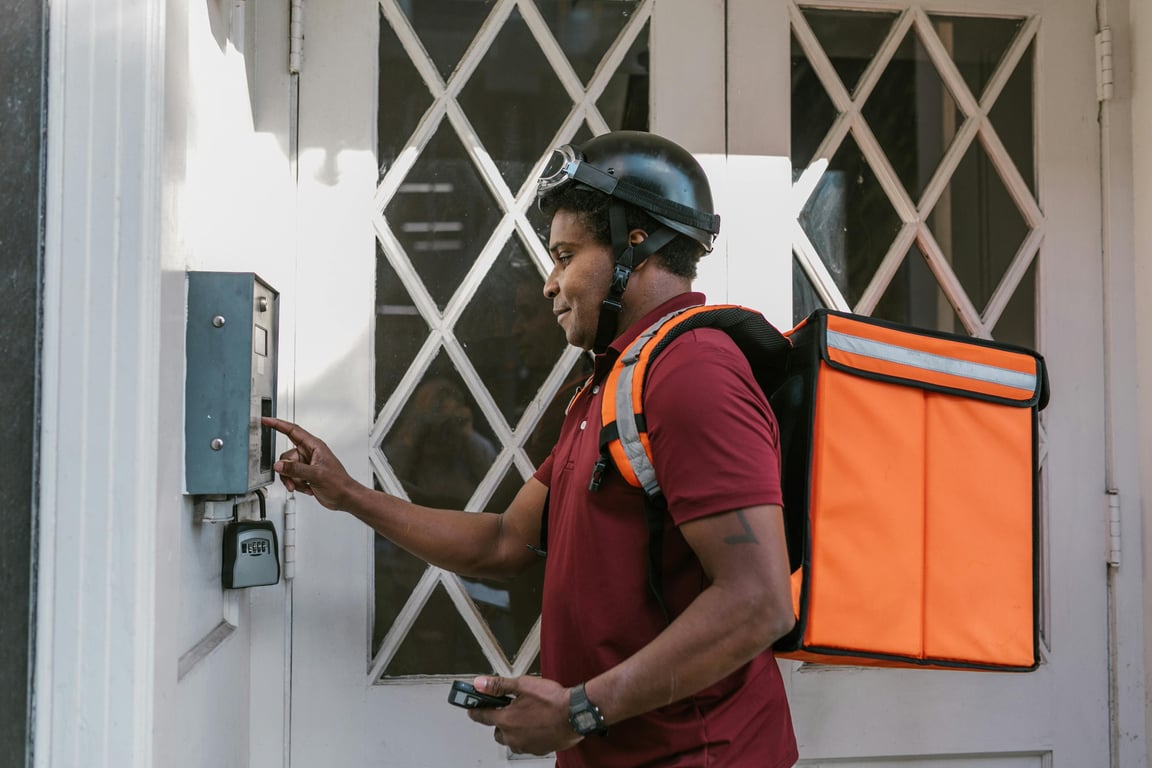 Driver picking up a Grubhub order from a restaurant · March, 2025
Base pay is also influenced by willingness to travel, local gas prices, and pickup density in a given area. Grubhub offers two bonus structures on top of base pay:
- Mission Bonuses: Extra pay for completing a set number of deliveries within a defined period
- Peak Pay: Additional earnings during high-demand windows
Like Uber Eats, Grubhub passes 100% of tips directly to drivers, making tip-heavy markets meaningfully more lucrative.
Which Delivery App Is Better To Work For?
The stronger choice depends on location and income goals. Uber Eats suits drivers who want higher earning potential and are comfortable with variable income tied to peak hours. Grubhub suits drivers who prefer structured bonuses and more predictable weekly earnings.
Both platforms operate as independent contracts with no exclusivity requirement, so working both simultaneously is an option worth considering. Drivers looking to compare further can explore how DoorDash stacks up as a third alternative.


'%3e%3cpath%20fill='%23eee'%20d='m0%200%208%2022-8%2023v23l32%2054-32%2054v32l32%2048-32%2048v32l32%2054-32%2054v68l22-8%2023%208h23l54-32%2054%2032h32l48-32%2048%2032h32l54-32%2054%2032h68l-8-22%208-23v-23l-32-54%2032-54v-32l-32-48%2032-48v-32l-32-54%2032-54V0l-22%208-23-8h-23l-54%2032-54-32h-32l-48%2032-48-32h-32l-54%2032L68%200H0z'/%3e%3cpath%20fill='%230052b4'%20d='M336%200v108L444%200Zm176%2068L404%20176h108zM0%20176h108L0%2068ZM68%200l108%20108V0Zm108%20512V404L68%20512ZM0%20444l108-108H0Zm512-108H404l108%20108Zm-68%20176L336%20404v108z'/%3e%3cpath%20fill='%23d80027'%20d='M0%200v45l131%20131h45L0%200zm208%200v208H0v96h208v208h96V304h208v-96H304V0h-96zm259%200L336%20131v45L512%200h-45zM176%20336%200%20512h45l131-131v-45zm160%200%20176%20176v-45L381%20336h-45z'/%3e%3c/g%3e%3c/svg%3e)